INFORMATION SYSTEMS. COMPUTER SCIENCES. ISSUES OF INFORMATION SECURITY
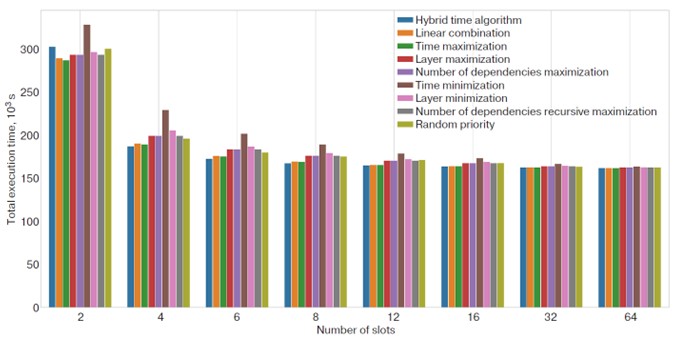
- There has been developed a novel task prioritization method for ETL pipelines, aimed at minimizing their total duration through deep analysis of structural features of Directed Acyclic Graphs (DAGs), as well as the use of simulation modeling to evaluate various scheduling strategies under conditions of competition for limited concurrency slots.
- The study proposed a Python simulation model, replicating ETL process execution in an environment with limited concurrency slots.
Objectives. The efficient management of parallel ETL (Extract, Transform, Load) process execution in central data warehouses critically impacts overall processing time. Existing orchestration tools such as Apache Airflow, NiFi, Luigi employ simplified prioritization algorithms which ignore dependency graph topology and resource dynamics, leading to suboptimal scheduling. The objective of this work is to develop and validate a novel task prioritization method for ETL pipelines, aimed at minimizing their total duration through deep analysis of structural features of Directed Acyclic Graphs (DAGs), as well as the use of simulation modeling to evaluate various scheduling strategies under conditions of competition for limited concurrency slots.
Methods. The study proposed a Python simulation model, replicating ETL process execution in an environment with limited concurrency slots. The model generates a DAG which reflects the dependency structure of processes for building a central data warehouse and compares 9 prioritization algorithms. These include basic algorithms (prioritization by minimum/maximum average execution time), topological algorithms (prioritization by minimum/maximum layer level, maximization of dependency count), and hybrid algorithms (splitting slots into queues for minimum and maximum execution time). Experiments were conducted on graphs of a variety of topologies using the developed simulation model.
Results. The hybrid algorithm (slot allocation: 50% for tasks with maximum execution time, 50% for tasks with minimum execution time) demonstrated the highest level of efficiency. It reduced total execution time by 15–17%, when compared to basic algorithms, minimized task idle time by 20–25%, and showed resilience to graph topology variations. A linear combination of optimized coefficients (execution time being the most significant factor) ranked second in terms of efficiency.
Conclusions. Prioritization based on DAG topology analysis and hybrid strategies significantly reduces ETL pipeline execution time. The hybrid algorithm is recommended for implementation in orchestrators, since it balances minimizing pipeline duration and task idle time. A promising area for further study is the development of adaptive algorithms that account for real-time dynamic resource load.
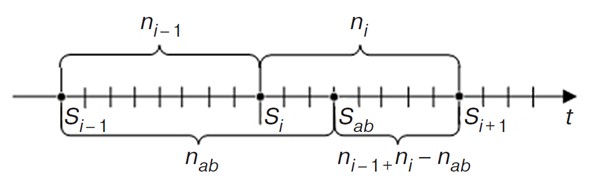
- There has been developed a method which reliably identifies the target message flow between two subscribers in multi-agent systems even in cases of authentication code collisions.
- The method developed has been found to demonstrate a Precision metric value in the range of 0.81–0.85, that is 40–50% higher than existing methods based on the analysis of inter-packet time intervals
Objectives. The paper examines the problem of improving the accuracy of identifying the message flow between two subscribers in multi-agent systems. This is done by analyzing the contextual characteristics of the overall message flow in the communication channel. Situations may arise during the process of source identification and verification of authenticity in which authentication codes for two or more messages collide. One way to resolve such conflicts is to isolate the message flow between two subscribers by leveraging its unique statistical characteristics which differ from the characteristics of the general message flow within the system. The aim of the paper is to develop a method which reliably identifies the target message flow even in cases of authentication code collisions.
Methods. The contextual characteristics of messages are used, in order to analyze and highlight patterns of agent behavior in the message flow. These characteristics include frequency of sending, message size, timestamps, and historical interaction data. The method involves the formation of statistical characteristics of the message flow between two agents in a multi-agent system, such as skewness and kurtosis, as well as distribution parameters for the number of messages sent between events from the target source along with their classification by means of logistic regression.
Results. During experiments, the method developed has been found to demonstrate a Precision metric value in the range of 0.81–0.85. This is 40–50% higher than existing methods based on the analysis of inter-packet time intervals, indicating that 81–85% of the messages classified as belonging to the target source are actually such. ROC analysis confirmed the high efficiency of the model and acceptable classification quality.
Conclusions. The results of the study show that the use of contextual characteristics and statistical analysis enables the accurate identification of target flows in multi-agent systems with a total number of agents ranging from 70 to 110. This method can be used in low-bandwidth communication channels where it is essential to minimize the size of the transmitted batch header and computational costs associated with authentication procedures.
MODERN RADIO ENGINEERING AND TELECOMMUNICATION SYSTEMS
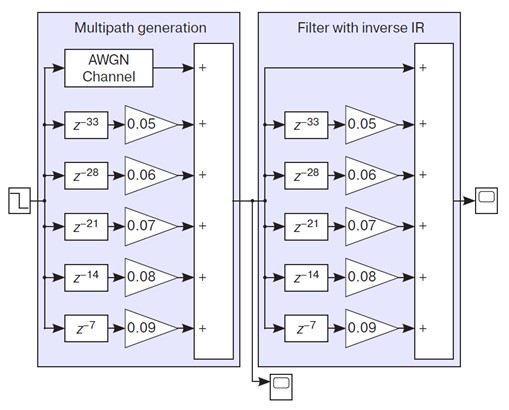
- The results of a study on the effectiveness of multipath compensation in communication channels when using filters with inverse impulse response (IR) to that of the channel at the receiving side are presented.
- A multipath communication channel model was developed in the Simulink software environment, consisting of six beams with different time delays and intensities.
- It was shown that the use of filters with inverse IR can significantly reduce BER and improve communication quality.
Objectives. A key challenge when transmitting data in modern communication systems is the multipath propagation of signals caused by reflections from various obstacles. Various methods have been developed to address this issue including: directional antennas; diversity reception; adaptive filtering; and the choice of effective modulation methods. One promising approach is the use of filters with impulse response (IR) inverse to IR channel. This allows for compensating delayed signals. The effectiveness of such filters depends on the accuracy of their parameter settings. The paper aims to develop guidelines for effectively using filters with inverse IR to compensate for multipath. Additionally, it aims to evaluate the impact of various channel parameters, such as time delays and reflected signal intensities, on the bit error rate (BER) and to determine the energy gain.
Methods. The methods of statistical radio engineering, the theory of optimal signal reception and mathematical modeling were used.
Results. The results of a study on the effectiveness of multipath compensation in communication channels when using filters with inverse IR to that of the channel at the receiving side are presented. A multipath communication channel model was developed in the Simulink software environment, consisting of six beams with different time delays and intensities. Discrete information reception was simulated using different modulation methods: 16-QAM (quadrature amplitude modulation), 8-PSK (phase-shift keying), and 8-FSK (frequency-shift keying). The BER value was estimated depending on the signal-to-noise ratio and multipath channel parameters, including time delays and reflected beam intensities. It was shown that the use of filters with inverse IR can significantly reduce BER and improve communication quality. The change in the BER value is estimated for deviations of filter parameters from the ideal ones.
Conclusions. The results demonstrate that the use of compensating filters is effective in combating multipath distortion, especially under strong interference conditions. The data obtained can be used for the design and optimization of modern communication systems operating in complex signal propagation conditions.
MICRO- AND NANOELECTRONICS. CONDENSED MATTER PHYSICS
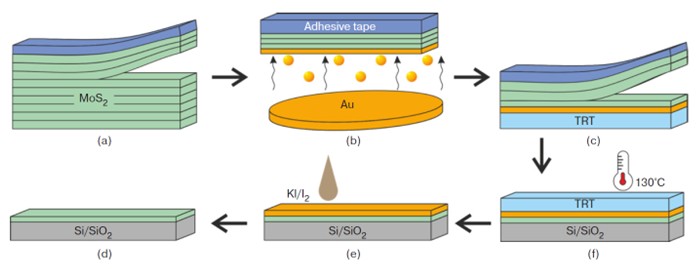
- There has been developed an effective method for obtaining large-area, high-quality monolayers of molybdenum disulfide (MoS2) on the surface of ferroelectric lead zirconate titanate (PZT) films which exhibit pronounced granularity and texturing.
- MoS2 crystallites with areas up to 3000 µm2 were obtained on PZT and over 65000 µm2 on standard Si/SiO2 substrates, both of which exhibit minimal defect densities.
Objectives. The aim of this study is to develop and demonstrate an effective method for obtaining large-area, high-quality monolayers of molybdenum disulfide (MoS2) on the surface of ferroelectric lead zirconate titanate (PZT) films which exhibit pronounced granularity and texturing. Conventional mechanical exfoliation techniques are inefficient for transferring two-dimensional materials onto nonplanar surfaces. This is due to local height variations and substrate granularity which hinder the formation of continuous monolayers and high-defect-density transferred structures. A particular challenge is the transfer onto functional substrates with surface topography characterized by heterogeneities ranging from tens of nanometers to micrometers.
Methods. A gold-assisted exfoliation (GAE) method was employed, including: magnetron sputtering of a 50 nm gold film; mechanical delamination of monolayers using thermally cleavable tape; and subsequent gold etching. The characterization was performed using X-ray diffraction, optical confocal microscopy, atomic force microscopy, and second harmonic generation techniques. The efficiency of the transfer process was compared for Si/SiO2 and PZT substrates.
Results. MoS2 crystallites with areas up to 3000 µm2 were obtained on PZT and over 65000 µm2 on standard Si/SiO2 substrates, both of which exhibit minimal defect densities. Conventional mechanical exfoliation is shown to be unable to ensure transfer onto textured surfaces, whereas the GAE method preserves the monolayer character of the transferred crystallites even on nonplanar substrates.
Conclusions. This work demonstrates for the first time the possibility of obtaining large-area, high-quality MoS2 monolayers on substrates with pronounced grainy and textured structures, such as ferroelectric PZT films, using the gold-assisted exfoliation method. The work also shows that gold-assisted exfoliation is an effective technique for fabricating extended two-dimensional films with controlled morphological and structural properties, including on substrates previously considered unsuitable for such applications.
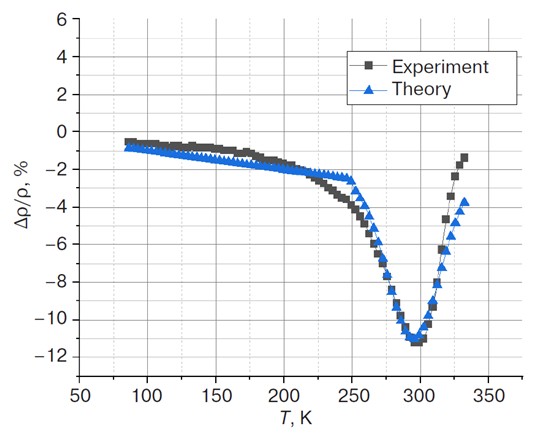
- The temperature dependence of electrical resistance for La67Ba0.33MnO3manganite films, grown by laser ablation on various dielectric substrates, is investigated over a wide temperature range.
- A unified empirical model to describe various mechanisms of magnetoresistance in doped manganites is proposed.
Objectives. This work aims to theoretically and experimentally investigate the specific features of magnetoresistance temperature dependence in nanostructured films of doped manganites. The temperature dependence of electrical resistance for La0.67Ba0.33MnO3 manganite films, grown by laser ablation on various dielectric substrates, is investigated over a wide temperature range.
Methods. Epitaxial La0.67Ba0.33MnO3 films with a thickness of 80 nm were grown by pulsed laser ablation using an АrF excimer laser (a laser wavelength of 247 nm) on single-crystalline SrTiO₃ and ZrO2(Y2O3) substrates. The magnetoresistance properties were measured using a two-probe DC method. The measurements were conducted in magnetic fields up to 8 kOe applied in the film plane, across a temperature range of 80–350 K. To accomplish the research objectives, an empirical magnetoresistance model was applied in two distinct temperature regions: near the magnetic phase transition temperature and in the ground-state region.
Results. Empirical relations for temperature dependence of magnetoresistance for nanostructured La0.67Ba0.33MnO3 films were established, encompassing both the Curie temperature region and the ground-state regime. Our studies revealed that the magnetoresistance of epitaxial single-crystalline La0.67Ba0.33MnO3 films exhibits a sharp peak exclusively near the Curie temperature while remaining negligible in other temperature ranges. Conversely, La0.67Ba0.33MnO3 films with a variant structure demonstrate significant low-temperature magnetoresistance. This effect arises from magnetic-field-induced modifications of the high-frequency conductivity, which results from spin-polarized electron tunneling across structural domain boundaries. A unified empirical model to describe various mechanisms of magnetoresistance in doped manganites is proposed.
Conclusions. For the first time, an empirical model to describe both the colossal and tunneling magnetoresistance in thin films of doped manganites has been developed. This model demonstrates excellent agreement between experimental and calculated data for La0.67Ba0.33MnO3 films with and without a variant structure. The simulation results agree well with experimental data. The findings elucidate the understanding of magnetoresistance mechanisms, contribute to the development of the magnetorefractive effect theory for thin-film manganites, and inform new approaches for controlling charge carrier dynamics in strongly correlated magnetic oxides.
MATHEMATICAL MODELING
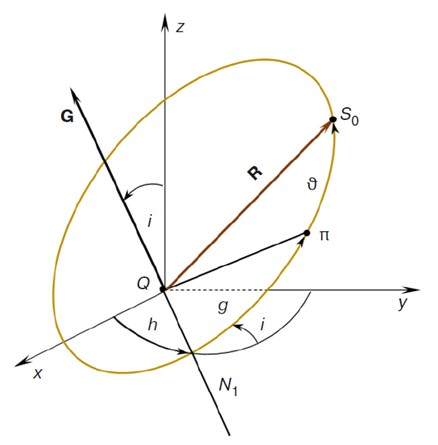
- The Hamiltonian and equations of motion of the artificial satellite of the Moon (ASM) in canonical Delaunay variables are obtained.
- Averaged and non-averaged systems of equations of motion of the ASM are derived in the form of autonomous systems of ordinary differential equations with respect to the following orbital parameters: semi-major axis, eccentricity, inclination, longitude of the ascending node, longitude of the pericenter from the ascending node, and true anomalies.
- Integral curves and phase portraits were constructed to demonstrate the interrelationship of orbital parameters.
Objectives. This work aims to derive and study the system of equations of orbital motion of an artificial satellite of the Moon (ASM) in the gravitational field of an attracting planet using Delaunay variables. This will ensure a reduction in computational complexity when modeling long-term trajectories, as well as provide an analysis of stationary orbits of the Moon taking into account the gravitational influence of the Earth as a third body.
Methods. The study uses analytical mechanics, asymptotic methods, in particular, the averaging method, methods of stability theory, numerical methods for integrating systems of ordinary differential equations.
Results. The Hamiltonian and equations of motion of the ASM in canonical Delaunay variables are obtained. Averaged and non-averaged systems of equations of motion of the ASM are derived in the form of autonomous systems of ordinary differential equations with respect to the following orbital parameters: semi-major axis, eccentricity, inclination, longitude of the ascending node, longitude of the pericenter from the ascending node, and true anomalies. A closed system of differential equations of the second order with respect to the orbital eccentricity and the pericenter longitude from the ascending node is obtained. Its stationary solutions are found, their stability is investigated, and conditions for the existence of stationary motions are determined depending on the value of the constant of the first integral of the averaged system of equations. Integral curves and phase portraits were constructed to demonstrate the interrelationship of orbital parameters. A comparative analysis was conducted using JPL Horizons data and previously published works.
Conclusions. The methoddeveloped enablesthedesignof trajectories for future lunar missions tobeoptimized (e.g., Artemis, Luna-Glob), thus providing a balance between accuracy and computational efficiency. The results confirm the prospects of using Delaunay variables for analyzing long-term orbital dynamics in gravitational fields of complex configuration.
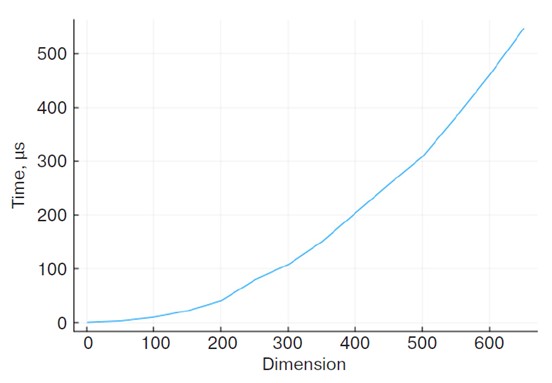
- A generalized nonlinear Support Vector Machine (SVM) method has been developed using adaptive transformation of the feature space, aimed at improving computational efficiency while maintaining high classification quality.
- Numerical experiments demonstrate that the proposed model significantly reduces classification time when compared to a polynomial-kernel SVM, while maintaining a comparable level of accuracy.
Objectives. This study focuses on the development and investigation of a generalized nonlinear Support Vector Machine (SVM) method incorporating an adaptive transformation of the feature space. Its aim is to improve computational efficiency while maintaining high classification accuracy. The binary classification problem is used as a case study. The main objective of the research is to quantitatively evaluate the performance of the proposed approach when compared to classical SVM models using fixed kernel functions, and to analyze how the transformation parameters affect classification quality.
Methods. The proposed approach involves a preliminary transformation of the input data using a learnable nonlinear mapping with a fixed structure. This mapping is implemented as a composition of elementary functions and is parameterized by a limited number of trainable weights which allows control over model complexity. A linear SVM with L2 regularization is applied after the transformation. The model is trained using conventional, unconstrained numerical optimization methods. The classification quality is evaluated using the Accuracy metric averaged over 10-fold cross-validation. The work also studies the behavior of the model with varying feature space dimensionality. In addition, computational complexity is analyzed in terms of the number of operations and inference time required on test datasets.
Results. Numerical experiments demonstrate that the proposed model significantly reduces classification time when compared to a polynomial-kernel SVM, while maintaining a comparable level of accuracy. The runtime analysis confirms that the proposed approach scales much better than traditional kernel methods. At the same time, the structure of the model remains interpretable and can be further adapted to the specifics of the application domain.
Conclusions. The method developed provides an efficient alternative to traditional kernel-based algorithms. Through the use of a parameterized transformation of the feature space, the method enables adaptability, interpretability, and scalability, making it promising for practical applications in machine learning tasks.
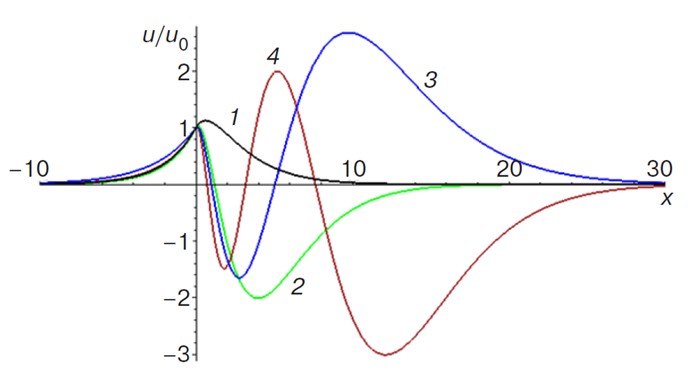
- A generalized hyperbolic permittivity profile was proposed to describe the spatially inhomogeneous distribution of the optical properties of a photonic crystal.
- An exact analytical solution of the wave equation with the selected permittivity profile was found in terms of the Whittaker function.
- The surface transverse electric waves have been described, where the field is localized near the surface of the photonic crystal and decreases with distance from it.
Objectives. Identification of the propagation patterns of surface waves in inhomogeneous and nonlinear crystal structures using mathematical models is an important fundamental problem in condensed matter physics, specifically waveguide optics. Models of waveguide structures used to establish an exact analytical solution are of particular significance. The aim of this work is to carry out a theoretical study of transversely polarized surface electric waves propagating along a photonic crystal with a certain refractive index profile.
Methods. The methods of mathematical physics, analysis, differential equations, and theory of special functions, as well as physical models of waveguide optics, were used in this study.
Results. A generalized hyperbolic permittivity profile was proposed to describe the spatially inhomogeneous distribution of the optical properties of a photonic crystal. This profile has a wide range of possibilities for varying its shape, allowing it to be used for a wide range of problems not limited to waveguide optics. An exact analytical solution of the wave equation with the selected permittivity profile was found in terms of the Whittaker function. Frequent cases of the generalized profile for which exact analytical solutions were indicated were also considered. These are expressed through the Whittaker and Macdonald functions. The study also describes surface transverse electric waves, where the field is localized near the surface of the photonic crystal and decreases with distance from it. The solution obtained also describes waveguide modes in which the field decreases with distance from the surface of the photonic crystal with oscillations. New features of surface wave localization were established. These were caused by a change in the parameters of the generalized hyperbolic profile modeling the dependence of the permittivity. It was also established that the maximum intensity of the surface wave is located in the photonic crystal.
Conclusions. The results of the description of the characteristics of surface waves obtained expand the theoretical concepts of waveguide optics. They can be useful in predicting the optical properties of various photonic crystal structures, as well as in designing various waveguide structures with the required dispersion-optical characteristics.
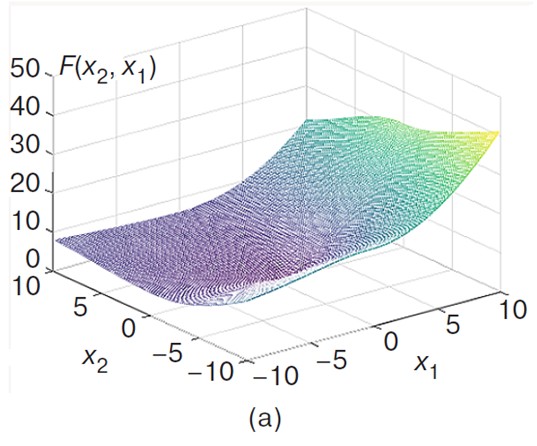
- There has been developed a methodology for studying the convergence of the quasi-Newton minimization algorithm on nonsmooth and nonconvex objective functions (OF)
- It was shown that, for the majority of cases in which all thresholds are achieved in all takes, a decrease in the OF follows the geometric progression law (linear convergence), however, in the second segment, convergence follows the power law.
Objectives. The aim of the paper is to develop a methodology for studying the convergence of the quasi-Newton minimization algorithm (QNA) on nonsmooth and nonconvex objective functions (OF), as well as to conduct related numerical experiments.
Methods. The experiments were performed on a flexible OF capable of mimicking various patterns of value changes in different directions away from the minimum. A total of 18 OF instances with different landscape parameters were studied. For each example, 200 QNA searches were performed from random staring points, and all corresponding OF values were recorded. Then, the Expected Run Time (ERT) to reach a given threshold level of the OF was computed based on the data. The dependence of the achieved OF threshold on ERT was approximated separately for the segment in which all thresholds were achieved in all searches, and for a segment in which the thresholds were achieved, but not in all searches.
Results. The experiments show that, for the majority of cases in which all thresholds are achieved in all takes, a decrease in the OF follows the geometric progression law (linear convergence). However, in the second segment, convergence follows the power law. It was also found that the presence of anisotropy of the OF landscape and a loss of smoothness lead to convergence slowdown, and premature termination of search process before reaching the minimum with the required accuracy.
Conclusions. The study identifies patterns in the QNA convergence on the objective functions with different landscape parameters. Further advancement of the methodology would involve automating data collection and processing, as well as extending it to other types of optimization algorithms.
PHILOSOPHICAL FOUNDATIONS OF TECHNOLOGY AND SOCIETY
- A scientific rationale for the methodological relevance of the communicative-aesthetic principle in teaching Russian as a foreign language to students of technical specialties has been demonstrated
- The impact of the communicative-aesthetic principle on the development of student speech culture and the formation of professional communication skills has been investigated.
Objectives. In the context of the internationalization of higher education and the growing role of the Russian language as a means of professional communication in educational environments, the search for effective methodological solutions for teaching foreign students in technical disciplines has become particularly relevant. The aims of this study are twofold: to provide a scientific rationale for the methodological relevance of the communicative-aesthetic principle in teaching Russian as a foreign language to students of technical specialties; and to identify the impact of the communicative-aesthetic principle on the development of student speech culture and the formation of professional communication skills.
Methods. The methodological framework includes a comparative analysis of existing pedagogical approaches which incorporate communicative and aesthetic elements, along with classroom observation in multilingual technical university settings. In order to ensure objectivity in the findings, elements of both quantitative and qualitative analysis of student responses and speech production were used.
Results. The findings indicate that the application of the communicative-aesthetic principle enhances precision and motivation amongst students learning the Russian language aligned with literary norms. A number of observations were made including: increased interest in language learning; improved integration into the academic and cultural environment; and the development of speech aesthetics. All these factors contribute to the formation of a professionally relevant linguistic worldview.
Conclusions. The communicative-aesthetic principle can be considered as an effective methodological tool in teaching Russian as a foreign language in technical universities. Its implementation enhances the educational potential of speech instruction and fosters the integration of aesthetic components into professionally oriented communication. The practical significance of the study lies in the potential application of the developed methodological recommendations in educational programs and teaching materials. A promising area for further research is the creation of didactic resources aimed at developing professionally oriented speech and fostering creative thinking among students.

ISSN 2500-316X (Online)